
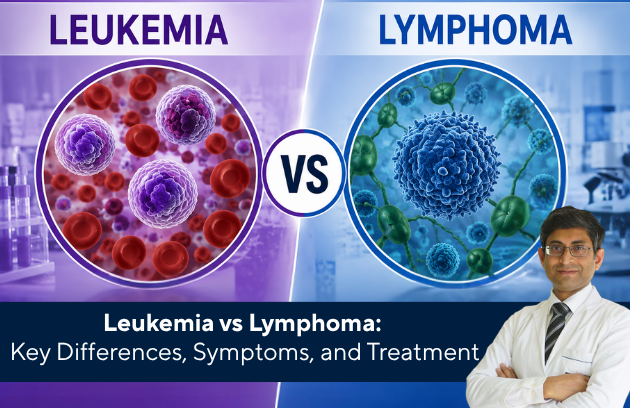
Leukemia vs Lymphoma: Key Differences, Symptoms, and Treatment
Blood cancers can be confusing, especially because terms like leukemia and lymphoma are often used interchangeably. However, these are distinct diseases with different origins, symptoms, diagnostic approaches, and treatment strategies. Understanding the difference can help patients and families recognize warning signs and seek appropriate specialist care.
What Is the Difference Between Leukemia and Lymphoma?
Both leukemia and lymphoma affect white blood cells, but they usually begin and behave differently.
Leukemia primarily starts in the bone marrow, where abnormal blood-forming cells multiply and interfere with the production of healthy blood cells. This can lead to anemia, infections, bleeding, and other symptoms related to bone marrow dysfunction.
Lymphoma, on the other hand, begins in lymphocytes and commonly affects the lymph nodes, spleen, and other parts of the lymphatic system. It may present as painless swelling or enlarged lymph nodes in areas such as the neck, armpit, or groin.
This difference in origin plays an important role in how each disease is diagnosed and treated.
Why This Distinction Matters
Leukemia often affects the blood and bone marrow more extensively, while lymphoma may initially involve specific lymph nodes or lymphatic tissues. As a result, the symptoms and investigations can be different.
A patient with leukemia may experience persistent fatigue, frequent infections, unusual bruising, or bleeding due to reduced production of healthy blood cells. Lymphoma may be suspected when a patient develops persistent, painless lymph node enlargement along with symptoms such as unexplained fever, night sweats, or weight loss.
Accurate diagnosis is essential because treatment depends on the exact type and subtype of blood cancer. A top leukemia specialist in Delhi NCR can help determine the disease subtype and guide patients toward an appropriate treatment plan.
Leukemia: Understanding the Disease
Types of Leukemia
Leukemia is broadly classified into acute and chronic forms.
Acute leukemia develops rapidly and usually requires prompt treatment. The two major forms are Acute Lymphoblastic Leukemia (ALL) and Acute Myeloid Leukemia (AML).
Chronic leukemia generally progresses more slowly. Chronic Lymphocytic Leukemia (CLL) and Chronic Myeloid Leukemia (CML) are the two major chronic forms. Some patients may not require immediate treatment, depending on the disease stage and overall health.
Common Symptoms of Leukemia
Leukemia symptoms can vary depending on the type and stage but may include:
- Persistent fatigue and weakness
- Frequent or severe infections
- Easy bruising or unusual bleeding
- Fever or recurrent fever
- Bone or joint pain
- Night sweats
- Swollen lymph nodes
- Petechiae or small red spots caused by bleeding under the skin
Treatment Approaches
Treatment for leukemia depends on its type, genetic characteristics, and the patient’s overall condition. Options may include chemotherapy, targeted therapy, immunotherapy, stem cell or bone marrow transplantation, and supportive treatments such as blood transfusions and infection management.
Lymphoma: Understanding the Disease
Types of Lymphoma
Lymphoma is mainly divided into two broad categories: Hodgkin Lymphoma and Non-Hodgkin Lymphoma (NHL).
Hodgkin Lymphoma is characterized by specific abnormal cells and is often highly treatable. Non-Hodgkin Lymphoma includes several different subtypes, ranging from slow-growing to aggressive forms.
Some slow-growing lymphomas may be monitored initially, while aggressive lymphomas may require treatment soon after diagnosis.
Common Symptoms of Lymphoma
Possible symptoms include:
- Painless swelling of lymph nodes
- Persistent fever
- Drenching night sweats
- Unexplained weight loss
- Ongoing fatigue
- Abdominal swelling or discomfort
- Cough or shortness of breath in some cases
Treatment Approaches
Treatment may depend on the type, stage, location, and biological characteristics of the lymphoma. Options can include chemotherapy, immunotherapy, targeted therapy, radiation therapy, or stem cell transplantation.
A best lymphoma cancer specialist in Delhi can help determine the specific subtype and recommend a treatment approach based on the patient’s individual condition.
Leukemia vs Lymphoma: Direct Comparison
| Feature | Leukemia | Lymphoma |
| Primary origin | Bone marrow and blood | Lymphatic system |
| Main affected cells | Abnormal blood-forming cells | Lymphocytes |
| Common presentation | Fatigue, infections, bleeding | Enlarged lymph nodes |
| Key diagnostic tests | Blood tests and bone marrow examination | Tissue or lymph node biopsy |
| Disease pattern | Often involves blood and bone marrow | Often begins in lymph nodes or lymphatic tissues |
| Treatment options | Chemotherapy, targeted therapy, immunotherapy, transplant | Chemotherapy, immunotherapy, targeted therapy, radiation |
When Should You Seek Specialist Evaluation?
Persistent swollen lymph nodes, unexplained fatigue, frequent infections, unusual bleeding, recurring fever, night sweats, unexplained weight loss, or persistent bone pain should not be ignored.
These symptoms do not always indicate cancer, but they should be evaluated when persistent or unexplained. Early medical assessment can help identify the underlying cause and ensure timely treatment when required.
A best radiation oncologist in Delhi NCR may be involved in multidisciplinary cancer care when radiation therapy is recommended, particularly for selected lymphoma cases. Dr. Dodul Mondal works with multidisciplinary oncology teams to support individualized treatment planning for patients with different types of cancer.
Conclusion
Although leukemia and lymphoma are both blood cancers, they are different diseases that require different diagnostic and treatment approaches. Leukemia primarily affects the bone marrow and blood, while lymphoma usually develops in the lymphatic system.
The symptoms can sometimes overlap, making proper testing and specialist evaluation important. An accurate diagnosis helps doctors identify the specific cancer subtype and select the most appropriate treatment strategy.
Early evaluation, modern diagnostic techniques, and personalized treatment planning can help improve outcomes and quality of life for patients with blood cancers.
Frequently Asked Questions
Q1. Can leukemia turn into lymphoma?
No. Leukemia and lymphoma are distinct diseases. However, some lymphomas can involve the bone marrow as the disease progresses.
Q2. Which is more common: leukemia or lymphoma?
The frequency varies by population and subtype, but non-Hodgkin lymphoma is generally more common than individual types of leukemia.
Q3. Which has a better prognosis?
Prognosis depends on the exact subtype, stage, age, overall health, and genetic or molecular characteristics of the cancer.
Q4. How are leukemia and lymphoma diagnosed?
Leukemia is commonly diagnosed using blood tests and bone marrow examination, while lymphoma usually requires a tissue or lymph node biopsy.
Q5. Is radiation therapy used for both conditions?
Radiation therapy is more commonly used in selected cases of lymphoma. It is less commonly part of standard treatment for leukemia.
Dr. Dodul Mondal has 22+ years of experience in Radiation Oncology and provides evidence-based treatment planning as part of multidisciplinary cancer care. Patients requiring specialized evaluation, treatment planning, or a second opinion for lymphoma and other cancers can consult for an individualized assessment.
Schedule your consultation for expert cancer evaluation and personalized treatment planning.