
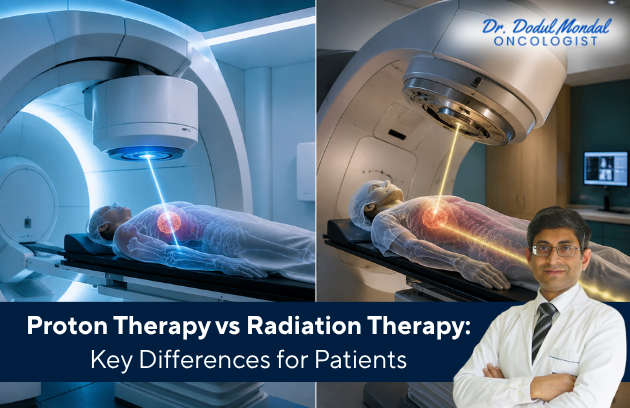
Proton Therapy vs Radiation Therapy: Key Differences for Patients
A cancer diagnosis brings with it a flood of decisions, and one of the most encouraging developments in modern medicine is just how many effective treatment options patients now have. Two terms that frequently come up during consultations are “proton therapy” and “radiation therapy.” Both are powerful, well-established tools that help patients achieve strong outcomes, and understanding how they work can help patients and caregivers feel more confident and informed as they move forward with treatment.
What Is Conventional Radiation Therapy?
Conventional radiation therapy, also known as photon therapy or X-ray therapy, uses high-energy X-ray beams to damage the DNA of cancer cells and stop them from multiplying. This approach has been refined over decades and continues to be one of the most trusted, effective, and widely accessible cancer treatments in the world. Techniques such as IMRT (Intensity-Modulated Radiation Therapy) and IGRT (Image-Guided Radiation Therapy) have made this treatment increasingly precise, allowing oncologists to shape and target beams with impressive accuracy while protecting as much healthy tissue as possible.
What Is Proton Therapy?
Proton therapy is an exciting, advanced form of targeted radiation treatment that uses positively charged particles called protons instead of X-rays. Its defining feature is something called the Bragg peak — protons release most of their energy precisely at the tumor site and then stop, allowing radiation oncologists to deliver a strong, tumor-focused dose while sparing surrounding healthy tissue to a remarkable degree. This precision has made proton beam therapy a valuable option for many patients seeking the most tissue-sparing treatment available today.
Key Differences Patients Should Know
The core difference lies in how each therapy interacts with the body. Photon-based radiation spreads energy along its entire path, while proton therapy concentrates its energy at a specific depth, offering an additional layer of precision. This makes proton therapy particularly beneficial for pediatric cancer treatment, where protecting a growing child’s developing organs matters greatly, as well as for tumors near the brainstem, spinal cord, or eyes. It is also proving highly effective for head and neck cancers, certain lung and liver tumors, and cases where patients have previously received radiation and may benefit from additional treatment with minimal added exposure.
Conventional radiotherapy remains an excellent, highly effective option as well, and continues to deliver outstanding results for a wide range of tumor types, sizes, and locations. The right choice depends on the tumor’s characteristics and the patient’s individual treatment journey, and today’s oncologists have more tools than ever to tailor a plan that works best for each person.
A Growing Range of Precision Options
Advances in both proton beam therapy and conventional radiotherapy mean patients today benefit from more individualized, technology-driven care than at any point in the past. Modern imaging, real-time treatment planning, and precision cancer treatment techniques allow oncologists to design plans that focus on maximizing tumor control while supporting patients’ comfort and daily quality of life throughout their treatment journey. This continuous innovation is a source of genuine optimism for patients and families navigating a cancer diagnosis.
Choosing the Right Specialist
Given how personalized this decision can be, working with the Best Radiation Oncologist in Delhi ensures that treatment planning is built around the latest imaging, tumor staging, and individual patient factors. A skilled oncologist takes time to explain the benefits of each approach clearly, helping patients feel empowered and confident about the path ahead rather than overwhelmed by the options in front of them.
About Dr. Dodul Mondal
Dr. Dodul Mondal is a well-regarded name in oncology, known for his patient-centric approach and expertise in advanced radiation techniques. As a trusted Proton Therapy Doctor in Delhi NCR, he works closely with patients to identify whether proton beam therapy, conventional radiotherapy, or a combination approach will best support their treatment goals. His focus remains on helping patients achieve strong outcomes while maintaining a good quality of life throughout their care.
Final Thoughts
Both proton therapy and conventional radiation therapy represent remarkable achievements in cancer care, and patients today have access to more precise, effective, and personalized treatment than ever before. Open conversations with an experienced oncology team about tumor location, treatment goals, and available technologies can help patients approach their journey with clarity and confidence.
If you or a loved one are exploring radiation treatment options, consulting an experienced specialist can help you feel informed, supported, and optimistic about the path forward.